

 by Dominika Dudek
Employer of Record – the structure of the model and the legal risks involved
The ongoing globalization of business activities and the growing prevalence of remote work have led companies to increasingly engage specialists in jurisdictions where they do not maintain their own corporate presence. This trend is particularly visible in sectors relying on highly specialized work, such as the IT industry and the technology services sector, in which employees are able to perform their duties remotely for foreign entities.
In such circumstances, there arises a need to identify a solution that allows for the lawful employment of workers in compliance with the regulations applicable in a given jurisdiction, without the necessity of establishing a local subsidiary or branch. One of the models used in practice for this purpose is the structure commonly referred to as Employer of Record (EOR).
An Employer of Record is an entity that formally employs a worker in a given jurisdiction and acts as the worker’s employer in the legal sense, while the employee performs work in practice for another entity – the EOR’s client.
The Employer of Record model typically involves three parties:
- Employee – performs work in a given jurisdiction.
- EOR Client – the entity for whose benefit the employee performs work.
- Employer of Record – the entity that formally employs the employee in the relevant jurisdiction and acts as the legal employer, while the employee performs work for another entity, i.e., the EOR client.
Why businesses use the EOR model
The EOR model is primarily used by international companies seeking to employ workers in a given country without establishing their own subsidiary or branch there.
The most common reasons for using this solution include:
- No need to establish a local legal structure (such as a subsidiary or branch).
- Ensuring compliance with local regulations – the EOR is responsible for ensuring that employment arrangements comply with local labour law, tax regulations, and the applicable social security system.
- Rapid market entry – the EOR model allows companies to employ workers quickly, without having to complete lengthy corporate registration procedures. It is often used when testing new markets.
- Reduction of administrative costs – payroll administration, employee documentation, tax settlements, and relocation processes may be handled by the EOR.
- HR support – the EOR may assume certain HR functions, such as preparing employment contracts, administering remuneration, and managing employee benefits.
- Local and compliant employment for workers – employees are formally employed under the labour laws of the relevant jurisdiction.
Legal risks associated with the EOR model
Despite its practical advantages, the Employer of Record model may give rise to a number of legal risks that should be assessed on a case-by-case basis, taking into account the specific structure of cooperation and the applicable legal framework.
- Lack of explicit legal regulation
Under Polish law, the Employer of Record model is not expressly regulated. In practice, it operates through legal structures that may resemble employee outsourcing or temporary agency work.
As a consequence, the legality and safety of a particular arrangement do not depend solely on the wording of contractual documentation, but primarily on the manner in which the relationship is performed in practice.
- Risk of the EOR client being considered the actual employer
One of the primary risks is the possibility that the entity benefiting from the employee’s work – rather than the EOR – may be considered the employer for the purposes of labour law.
This risk increases in situations where the EOR client independently organizes the employee’s work, issues binding instructions, supervises the performance of duties, and exercises day-to-day control over the employee.
In such circumstances, regulatory authorities or courts may conclude that the client is in fact acting as the employer. In practice, the issue of employee subordination is one of the key elements analyzed when assessing structures of this type.
- Tax and social security risks
The use of the Employer of Record model may also give rise to uncertainties concerning the proper determination of the place of taxation of the employee’s income, the identity of the withholding agent, and the correct settlement of social security contributions.
Furthermore, where the entity benefiting from the employee’s work is a foreign company, there may be a risk that its activities give rise to a permanent establishment in the relevant jurisdiction.
The assessment of these issues typically requires an analysis not only of domestic legislation but also of applicable double taxation treaties and social security coordination rules.
- Risks related to the scope of EOR rights and obligations
It should also be noted that an Employer of Record assumes not only a significant portion of administrative obligations related to employment but also certain rights and privileges arising from its status as the formal employer.
This may be particularly relevant in the context of employee-created works and the acquisition of intellectual property rights in the results of an employee’s work. In the absence of appropriate contractual provisions, doubts may arise as to whether such rights are acquired by the EOR client or by the EOR itself.
- Risk of being treated as temporary agency work
In certain circumstances, the Employer of Record model may be considered similar to temporary agency work.
This may occur in particular where the formal employer merely “provides” personnel while the entity benefiting from the employee’s work effectively directs and supervises the employee’s activities. In such cases, there is a risk that the arrangement may be considered as operating in breach of the regulations governing temporary agency work, including the requirement to obtain the appropriate registration as a temporary work agency.
Employer of Record in judicial practice – emerging disputes
Although Polish case law has not yet developed a consistent line of decisions directly addressing the Employer of Record model, disputes involving structures of this type are beginning to appear in practice.
An example is the judgment of the Voivodeship Administrative Court in Gdańsk of 10 December 2025 (I SA/Gd 674/25). While the case did not directly concern the legality of the EOR model, it illustrates how disputes may arise in situations where the formal employer is separated from the entity that actually manages and directs the employee’s work.
In that case, the applicant attempted to demonstrate that the relationship with the foreign entity benefiting from the employee’s work in fact bore the characteristics of an employment relationship, whereas the EOR acted merely as the formal employer. The case therefore demonstrates that separating the formal employer from the entity that exercises actual managerial authority may lead to disputes not only under labour law, but also in the field of tax law.
Summary
The Employer of Record model may constitute a practical solution for businesses seeking to employ workers in foreign jurisdictions without establishing a local corporate presence. In many cases, it enables companies to enter new markets quickly while ensuring compliance with local labour law, tax regulations, and social security systems.
At the same time, practical experience shows that the key factor is the proper structuring of the relationship between the EOR provider and the entity benefiting from the employee’s work. In many instances, it is the practical organization of the arrangement – rather than the model itself – that determines whether the solution will be legally secure from the perspective of labour law, taxation, and social security regulations.
If you are considering implementing an Employer of Record model in your organization, evaluating alternative workforce structures, or reviewing the compliance of existing arrangements, it may be advisable to conduct a prior legal assessment of the proposed structure.
We invite you to contact our Employment Law team, who will be pleased to assist with assessing potential solutions and designing a workforce model tailored to the specific needs of your business.
attorney-at-law | senior counsel
attorney-at-law | senior counsel
 by KBZ Legal
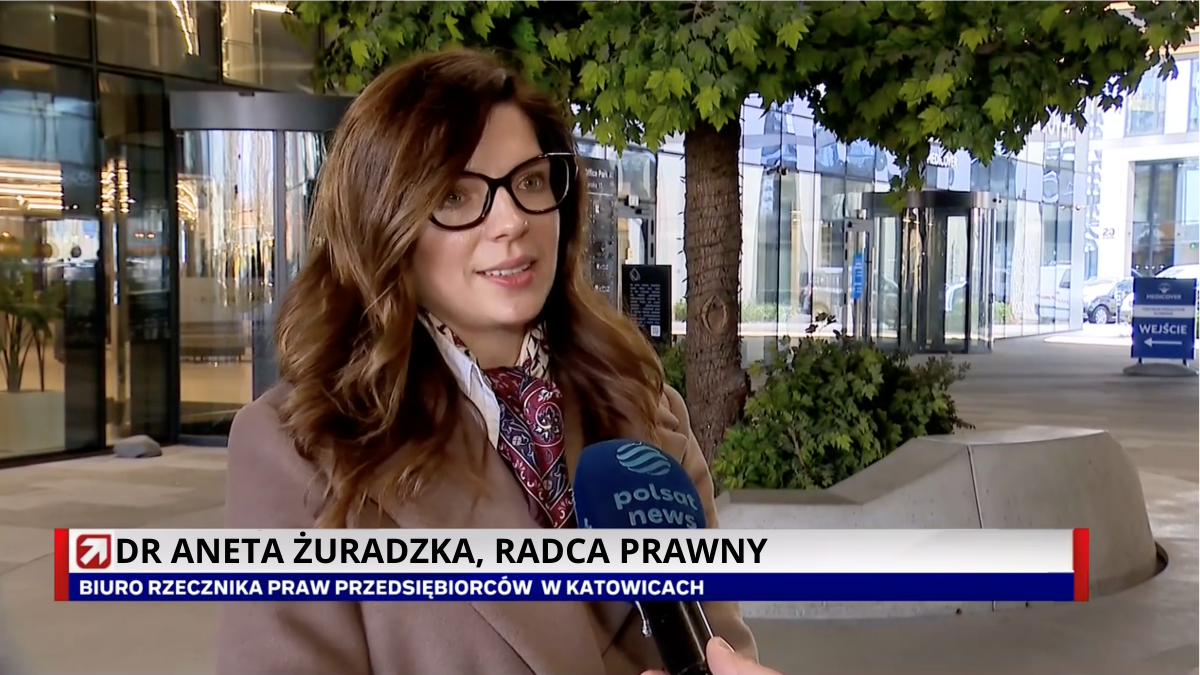
Amendment to the Act on the National Labour Inspectorate – commentary by Attorney-at-law Dr Aneta Żuradzka in Polsat News
12 March 2026 in Polsat News, Aneta Żuradzka, PhD, commented on the amendment to the Act on the National Labour Inspectorate adopted by the Polish Parliament and its implications for businesses.
“From a business perspective, it is important that the final version of the amendment softens the most controversial solutions from earlier drafts,” says Dr Aneta Żuradzka. “Among others, the automatic immediate enforceability of labour inspector decisions and the possibility for inspectors to recognise an employment relationship with retroactive effect have been removed. However, the new regulations may in practice lead to an increase in disputes, particularly in the context of B2B relationships.”
The amendment also significantly increases sanctions for offences against employee rights:
-
the maximum fine increases from PLN 30,000 to PLN 60,000,
-
in some cases even from PLN 45,000 to PLN 90,000,
-
the maximum fines imposed by labour inspectors have also been increased – from PLN 2,000 to PLN 5,000, and up to PLN 10,000 in case of repeated offences.
We are aware that the new regulations raise concerns among businesses. In particular, there is a perceived risk of excessive administrative discretion in matters that have so far been primarily assessed by labour courts in practice.
Listen to the full commentary:
https://lnkd.in/dvbcbjE3
If you have any questions regarding the impact of the new regulations on your employment structures, please feel free to contact Dr Aneta Żuradzka, Head of the Employment & GDPR practice at KBZ Law & Tax.