


KBZ Law & Tax China Desk strengthens business cooperation between Poland and China
In recent weeks, representatives of KBZ Law & Tax have been conducting business meetings in China, further developing cooperation with partners, clients and companies interested in expanding into Poland and the wider European Union market.
The visit included meetings with the firm’s partners — Hui Ye Law Firm in Beijing and Winners Law Firm in Tianjin — focusing on strengthening international cooperation and supporting businesses involved in cross-border projects between China and Europe.
Business relations between China and Europe are increasingly extending beyond traditional trade. Discussions now focus on long-term market presence, intellectual property protection, cross-border investments, tax structuring, compliance, operational setup and strategic expansion into the European market.
Through its dedicated China Desk, KBZ Law & Tax supports companies operating between China, Poland and the European market, providing integrated legal and tax advisory covering foreign investment projects, regulatory matters, IP protection, corporate structuring, taxation, employment and immigration support.
Developing international relationships and maintaining direct dialogue with business partners remain key elements of effectively supporting foreign investors.
China Desk KBZ Law & Tax – Supporting Your Investment in Poland.

You are Welcome to contact us
Partner | Advocate

Inauguration of the Silesian Council for Korean Investments
On 13 May 2026, the official inauguration of the Silesian Council for Korean Investments took place in Katowice. The Council was established as a new platform for institutional cooperation aimed at supporting investments by enterprises from the Republic of Korea and further strengthening economic relations between Poland and South Korea.
The initiative was established by Katowice Special Economic Zone, and has been granted the honorary patronage of the Embassy of the Republic of Korea in the Republic of Poland. The ceremony was attended by His Excellency Ambassador Jun Youl Tae.
The event was also attended by Krzysztof Żuradzki, Advocate, Managing Partner at KBZ Law & Tax and Ombudsman for Entrepreneurs at the Regional Chamber of Commerce in Katowice. Dr Chang Il You was appointed as Special Advisor for Poland–Korea Relations, supporting communication and ensuring continuity of dialogue between the partners.
Representatives of the institutions forming the Silesian Council for Korean Investments also participated in the inauguration, including the Embassy of the Republic of Korea in the Republic of Poland, the Silesian Voivodeship Office, the Marshal Office of the Silesian Voivodeship, the Upper Silesian-Zagłębie Metropolis, Katowice Special Economic Zone, the University of Economics in Katowice, the University of Silesia, the Regional Chamber of Commerce in Katowice, Korean Business Chamber Poland, as well as organisations representing Korean investors and entrepreneurs.
The Council was established as a cooperation forum and consultative-advisory body aimed at supporting dialogue between regional institutions and the Korean investor community. Its role will include identifying systemic barriers, exchanging experience, and developing recommendations supporting investment growth and enhancing the investment attractiveness of the region.
Economic relations between Poland and the Republic of Korea play a strategic role in the development of the region, while Korean investments significantly contribute to the growth of modern industry in Silesia — particularly in the areas of industry, electromobility, new technologies and infrastructure projects. Katowice Special Economic Zone remains one of the leading investment hubs in Central and Eastern Europe.
The establishment of the Silesian Council for Korean Investments marks another important step in building long-term economic cooperation between Poland and the Republic of Korea and creating a stable ecosystem for large-scale investment projects. KBZ Law & Tax is also actively involved in these activities through its dedicated Korean Desk, supporting Korean investors at every stage of doing business in Poland — from market entry and investment structuring to ongoing legal, tax, regulatory and immigration advisory.
We encourage you to contact our Korean Desk:
Managing Partner | Adwokat
Dr Chang Il You
Korean Desk Advisor


Jego Ekscelencja Ambasador Jun Youl Tae and Krzysztof Żuradzki

When in EU | Why EPR is the first barrier for non-EU sellers
If you are a non-EU company selling products in Europe, there is one rule you cannot afford to overlook: EPR – Extended Producer Responsibility.
EPR is often categorised as an environmental policy. In practice, it functions as a legal condition for market access.
Under EU law, producers placing products on the market may be required to finance and organise the collection, treatment, recycling and recovery of waste generated by those products. The legal framework stems primarily from:
• Directive 2008/98/EC on waste (Waste Framework Directive)
• Directive 94/62/EC on packaging and packaging waste
• Directive 2006/66/EC on batteries and accumulators
• the recently adopted Packaging and Packaging Waste Regulation (PPWR)
What EPR means in practice
EPR means that companies placing products on the EU market must take responsibility for the post-consumer phase of those products – covering packaging, electronics (WEEE) and batteries. This responsibility translates into mandatory registration, reporting obligations, environmental fees and cooperation with recycling organisations. In many EU countries, these obligations must be fulfilled before products are offered for sale.
Why this matters for e-commerce
Marketplaces such as Amazon are no longer neutral platforms – they actively verify EPR compliance. Without valid EPR registration numbers, listings may be blocked, accounts suspended and expansion into Europe halted overnight. This is particularly visible in Germany and France, where marketplace enforcement mechanisms are already well developed.
What we see in practice
Many international sellers focus on logistics, pricing, customs and marketing. Fewer take early account of regulatory compliance – which is frequently the first real barrier they encounter in the EU.
We regularly work with international clients who already sell in Europe without full compliance, receive urgent requests from marketplaces, or assume that registration in one EU country covers the whole Union. In most cases, the issue is not legal complexity but a lack of early planning.
Takeaway
For any company entering the EU market, EPR is a practical licence to sell.
In the next article, we explain who exactly must comply and why non-EU sellers face stricter obligations.
Partner | Advocate
Senior Counsel | Advocate

KBZ Law & Tax at the Poland–Korea Business Forum 2026 in Seoul
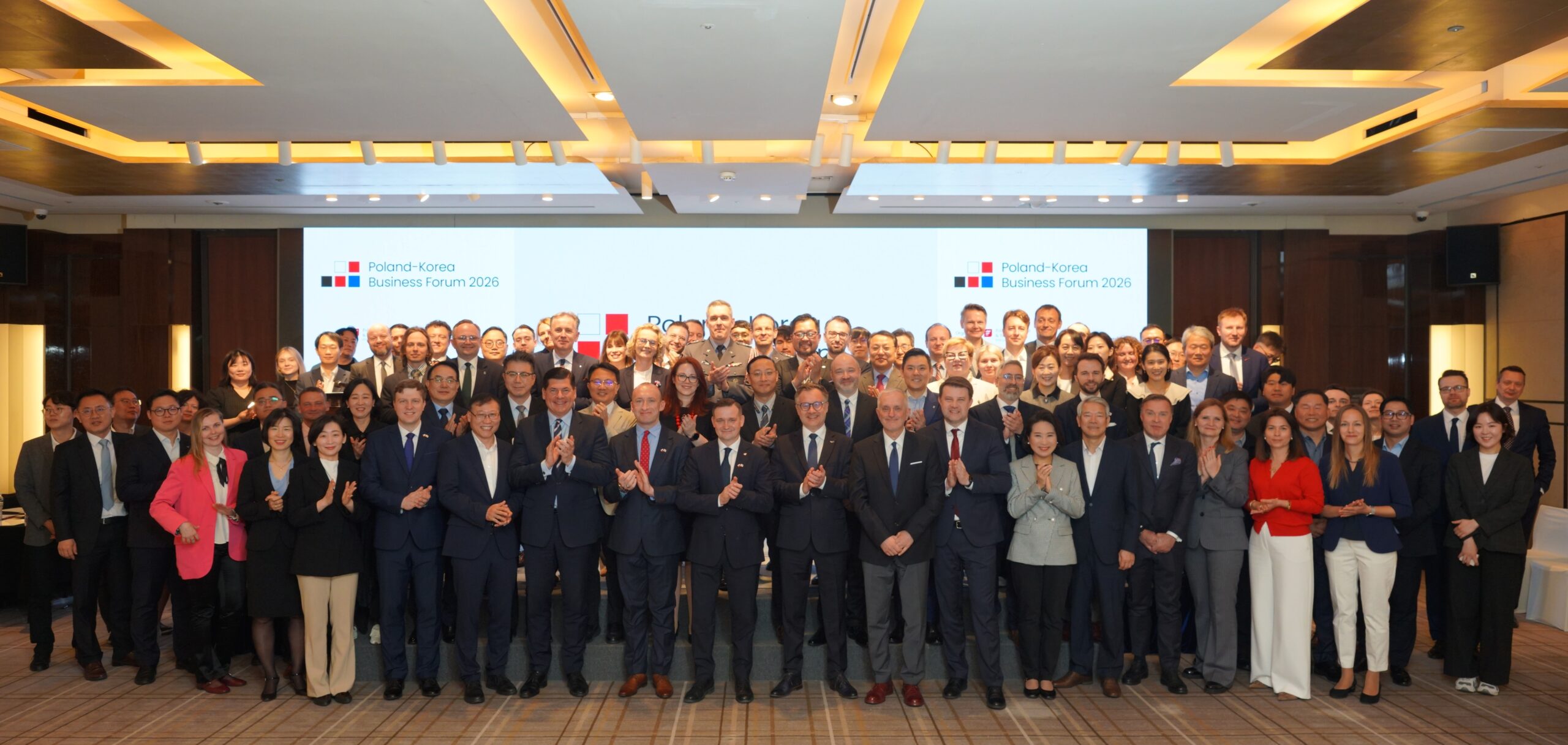
KBZ Law & Tax was an active participant in the Poland-Korea Business Forum, supporting dialogue with investors and strengthening business relations between Poland and South Korea. Our presence reflects our continued commitment to advising Korean investment projects and developing our Korean Desk.
During the session Powering Industrial Competitiveness: Green Industry, Smart Energy, Krzysztof Żuradzki, Managing Partner and Advocate, shared insights on:
▪ how Poland’s pro-green legislative reforms are shaping a competitive investment environment,
▪ why Poland is emerging as a green industrial hub in Europe,
▪ and how local legal expertise helps de-risk Korean investments and accelerate market entry.
KBZ was also represented by Błażej Siedlich, Attorney-at-Law and Korean Desk Counsel, contributing to discussions on investment execution, workforce mobility, and regulatory frameworks.
The Forum gathered over 150 participants and marked the first step in implementing the comprehensive strategic partnership announced by Lee Jae-myung and Donald Tusk. The discussions focused on key sectors including energy, industry, research and development (R&D), and dual-use technologies.
With participation from institutions such as the Polish Investment and Trade Agency, the Forum confirmed Poland’s position as a leading investment destination in Europe and a strategic partner for South Korea.
With one of the most established Korean Desks in Poland, KBZ Law & Tax supports Korean investors across the full investment lifecycle — from market entry and structuring to ongoing legal, tax, and regulatory advisory.
If you are planning an investment in Poland or expanding into the European market, we encourage you to contact our Korean Desk. We support Korean investors at every stage of their projects, combining local expertise with a practical, business-oriented approach.
You are welcome to contact uu.
Managing Partner | Adwokat


KBZ HR NEWS | Changes to the process for applying for residence permits – preparations for the launch of MOS 2.0. 10 key points
A new version of the MOS portal, or Case Management Module, used for submitting applications for residence permits in Poland, is due to be launched shortly. This change will be of significant importance for both foreign nationals and employers, universities and other entities involved in the procedure. The new system is designed to enable the fully electronic submission of applications for temporary residence permits, permanent residence permits and EU long-term resident permits.
Below are the 10 most important facts about MOS 2.0.
1.Applications exclusively online
The most significant change will be that, once the new portal is launched, applications covered by the MOS system will only be accepted in electronic form.
In practice, this means that any paper application received by the provincial office after the new system goes live will not be processed. For this reason, those who still wish to use the existing paper application route should plan how to submit their application well in advance. In practice, the safer option will be to submit the application directly at the office’s reception desk, rather than by post, to ensure that the document reaches the office before the launch of MOS 2.0. Simply posting the application before that date will not be sufficient.
2.A personal visit will still be necessary
The very idea of the new system boils down to the full digitisation of the application submission stage. A foreign national will have to log in to the portal, complete the form, attach the required documents in digital form and sign the whole thing electronically. This does not, however, mean that the entire procedure will be conducted without the personal involvement of the applicant. It will still be necessary to appear in person when summoned by the provincial governor, in particular to present original documents, provide fingerprints and a specimen signature.
3.Electronic signature or trusted profile required
One of the key new features is also the need to have the appropriate tools for electronic identification. Accounts on the new MOS portal will primarily be available to adult foreign nationals, and in the case of minors, also to their parents, guardians or curators. A trusted profile or a qualified electronic signature will be required to use the system. It is important to note that every foreign national will have to have their own account – applications cannot be submitted from a representative’s account.
4.Deletion of existing MOS accounts
It is also worth noting that the new MOS portal will not be a continuation of the existing user account. Users of the current version of the system will not have their data or accounts automatically transferred. The existing portal is to be deactivated, and user accounts deleted.
5.Requirement to submit the application personally via the online portal
Foreign nationals must log in to the portal themselves and submit an application from their own account. A representative will not be able to create an account on behalf of the client or use their login details. Of course, legal or organisational assistance in preparing the application will still be available, but formal actions within the system will have to be carried out in accordance with security rules and using the user’s individual access. In practice, this means that handling residence matters may require greater involvement from the foreign national themselves than before.
6.Electronic attachments
Changes are also significant in cases where the application requires additional documents signed by other parties, in particular by an employer or a university. In the new system, the relevant attachments are to be signed electronically. From a practical perspective, this means that the successful submission of an application will depend not only on the foreign national’s readiness, but also on the efficient cooperation of other parties involved in the process. In many cases, this may prolong the preparation of documentation, especially if the employer or another party is not ready to sign the required attachments electronically without delay. This is one of the most significant organisational changes, which may have a real impact on meeting the deadline for submitting the application.
7.Certificate of application submission instead of a stamp
After submitting the application, the user will be able to download an official confirmation of receipt, and following verification by the authorities, also a certificate of application submission, which is intended to replace the current stamp in the passport.
Failure to provide fingerprints will no longer constitute a formal deficiency in the application.
8.Some types of applications will still be submitted on paper
It should also be emphasised that MOS 2.0 will not become a universal channel for handling all residence matters. Certain types of applications will still be submitted in paper form, under the existing rules. This means that once the new system comes into force, it will still be necessary to determine on a case-by-case basis whether a particular category of application is already subject to the mandatory electronic route or remains outside the system.
9.Date of entry into force of MOS 2.0
Another important practical issue is the timing of the new system’s entry into force. According to announcements, the exact launch date of the portal is to be announced in a communication from the Minister of the Interior and Administration at least 14 days in advance. On the one hand, this allows some time to react, but on the other, it means that the transition period will be very short. This is of particular importance for individuals whose legal stay is due to expire shortly, as well as for companies employing foreign nationals. If the end date of legal stay falls in the period immediately preceding the implementation of the new system or shortly after its launch, delaying the submission of an application may entail unnecessary risk.
It is worth noting that in a statement dated 1 April 2026, the Office for Foreigners announced that work on the new MOS portal had entered its final phase, with testing due to conclude next week (6–10 April 2026), which may indicate that the system is due to be launched shortly.
10.Risks associated with the system
Technical issues are also significant. Although the aim of MOS 2.0 is to simplify access to the procedure and enable applications to be submitted from anywhere, any full digitalisation carries with it the risk of organisational problems, system overloads or difficulties for users. From the point of view of legal certainty, it is not advisable to plan to submit an application on the last day of legal residence. In residence matters, the margin for error should be as small as possible. This applies particularly to situations where an electronic signature will be required, as in such cases the time needed for technical preparation may be longer than before.
In summary, MOS 2.0 represents a significant change to the entire organisation of residence application submissions. The new system moves the point of application submission into the digital space, requires prior preparation of authentication tools and electronic signatures, increases the importance of efficient cooperation with the employer or other entity signing the attachments, and necessitates greater caution when planning deadlines. For many foreign nationals and employers, the most sensible approach may be to analyse in advance which cases should be initiated before the new system goes live. This applies particularly to cases where the period of legal residence is due to expire shortly, or where submitting an application will require additional organisational coordination.
Should you require assistance, we are at your disposal to help analyse which applications are worth preparing and submitting before the new system is launched, as well as to ensure you are properly prepared for its implementation.
senior counsel | advocate
senior counsel | attorney-at-law
associate | lawyer

KBZ Law & Tax and Katowicka Specjalna Strefa Ekonomiczna S.A. sign a letter of intent to support foreign investors
KBZ Law & Tax and Katowice Special Economic Zone S.A. (KSSE) have signed a letter of intent aimed at developing cooperation in providing comprehensive support to foreign investors operating or planning to establish a presence in Poland.
The cooperation will focus in particular on investors from Asia, with a strong emphasis on South Korea – one of the key investment directions in the region. The initiative responds to the growing interest in Poland as a location for manufacturing and technology investments.
The letter of intent on behalf of KBZ Law & Tax was signed by Krzysztof Żuradzki, Managing Partner, and Dr Chang Il You, Advisor within the Korean Desk.
The signing of the document with President Rafał Żelazny marks another step towards building an integrated support ecosystem for investors – combining KSSE’s experience in investment processes with KBZ Law & Tax’s legal and tax advisory expertise.
Under the agreement, the parties intend to:
- jointly attract foreign investors, particularly from the Korean market,
- organise events and educational initiatives for businesses,
- support investors in market entry processes, including structuring, regulatory and tax aspects,
- exchange knowledge and experience related to operating within the Polish Investment Zone framework.
The Korean market remains a key focus area for KBZ Law & Tax. Through its Korean Desk, the firm supports investors at every stage of their projects – from market entry and investment implementation to ongoing operational support, including employment and Global Mobility.
The cooperation between KBZ Law & Tax and KSSE is aimed at delivering coordinated, end-to-end support to investors and strengthening Poland’s position as an attractive destination for foreign investment.
For Korean investors and companies planning expansion into Poland, our Korean Desk provides end-to-end legal and tax support. For further information, please do not hesitate to contact us.
Managing Partner at KBZ Law & Tax.

When in EU | Resetting the Map of Obligations: What Omnibus I Changes in CSRD and CSDDD
Over 50,000 companies across the EU are currently preparing for ESG reporting based on thresholds that are about to become obsolete.
Directive (EU) 2026/470, known as Omnibus I, entered into force on 18 March 2026 and introduces a fundamental redesign of two key pillars of the EU ESG framework: the Corporate Sustainability Reporting Directive (CSRD) and the Corporate Sustainability Due Diligence Directive (CSDDD).
For many companies – and their advisors – this means one thing: a full reassessment of what has already been planned.
The reform operates on three levels:
1.New CSRD thresholds
The obligation to prepare and publish sustainability reports will be limited exclusively to large undertakings employing, on average, more than 1,000 employees.
Entities below this threshold will be protected against excessive information requests from larger companies within the value chain. The upper limit of such requests will be defined by the voluntary VSME standard developed by EFRAG.
2.Simplified due diligence under CSDDD
Due diligence obligations will, as a rule, be limited to a company’s own operations, its subsidiaries, and its direct business partners.
Deeper tiers of the value chain will no longer be subject to mandatory assessment. Monitoring cycles will be extended from 1 year to 5 years.
This marks a significant shift for business partners within supply chains – including SMEs – which previously faced the risk of annual information requests.
Instead of mandatory termination of business relationships in case of identified breaches, companies will be required to suspend cooperation and engage in dialogue with the supplier to work towards a solution.
3.SME protection
The voluntary VSME standard will become a formal ceiling within the value chain. Companies above the threshold will not be allowed to request data from smaller partners beyond this standard.
Member States have until 19 March 2027 to transpose the directive into national law. In parallel, the “stop-the-clock” Directive (2025/794) already postpones the application of certain requirements until the transposition process is completed.
For companies currently building reporting systems based on previous thresholds, this is the right moment to revisit those plans.
For SMEs operating within the supply chains of large corporations, the reform brings tangible relief – but does not remove the need to build ESG capabilities.
Partner | Advocate
Senior Counsel | Advocate

Employer of Record – the structure of the model and the legal risks involved
The ongoing globalization of business activities and the growing prevalence of remote work have led companies to increasingly engage specialists in jurisdictions where they do not maintain their own corporate presence. This trend is particularly visible in sectors relying on highly specialized work, such as the IT industry and the technology services sector, in which employees are able to perform their duties remotely for foreign entities.
In such circumstances, there arises a need to identify a solution that allows for the lawful employment of workers in compliance with the regulations applicable in a given jurisdiction, without the necessity of establishing a local subsidiary or branch. One of the models used in practice for this purpose is the structure commonly referred to as Employer of Record (EOR).
An Employer of Record is an entity that formally employs a worker in a given jurisdiction and acts as the worker’s employer in the legal sense, while the employee performs work in practice for another entity – the EOR’s client.
The Employer of Record model typically involves three parties:
- Employee – performs work in a given jurisdiction.
- EOR Client – the entity for whose benefit the employee performs work.
- Employer of Record – the entity that formally employs the employee in the relevant jurisdiction and acts as the legal employer, while the employee performs work for another entity, i.e., the EOR client.
Why businesses use the EOR model
The EOR model is primarily used by international companies seeking to employ workers in a given country without establishing their own subsidiary or branch there.
The most common reasons for using this solution include:
- No need to establish a local legal structure (such as a subsidiary or branch).
- Ensuring compliance with local regulations – the EOR is responsible for ensuring that employment arrangements comply with local labour law, tax regulations, and the applicable social security system.
- Rapid market entry – the EOR model allows companies to employ workers quickly, without having to complete lengthy corporate registration procedures. It is often used when testing new markets.
- Reduction of administrative costs – payroll administration, employee documentation, tax settlements, and relocation processes may be handled by the EOR.
- HR support – the EOR may assume certain HR functions, such as preparing employment contracts, administering remuneration, and managing employee benefits.
- Local and compliant employment for workers – employees are formally employed under the labour laws of the relevant jurisdiction.
Legal risks associated with the EOR model
Despite its practical advantages, the Employer of Record model may give rise to a number of legal risks that should be assessed on a case-by-case basis, taking into account the specific structure of cooperation and the applicable legal framework.
- Lack of explicit legal regulation
Under Polish law, the Employer of Record model is not expressly regulated. In practice, it operates through legal structures that may resemble employee outsourcing or temporary agency work.
As a consequence, the legality and safety of a particular arrangement do not depend solely on the wording of contractual documentation, but primarily on the manner in which the relationship is performed in practice.
- Risk of the EOR client being considered the actual employer
One of the primary risks is the possibility that the entity benefiting from the employee’s work – rather than the EOR – may be considered the employer for the purposes of labour law.
This risk increases in situations where the EOR client independently organizes the employee’s work, issues binding instructions, supervises the performance of duties, and exercises day-to-day control over the employee.
In such circumstances, regulatory authorities or courts may conclude that the client is in fact acting as the employer. In practice, the issue of employee subordination is one of the key elements analyzed when assessing structures of this type.
- Tax and social security risks
The use of the Employer of Record model may also give rise to uncertainties concerning the proper determination of the place of taxation of the employee’s income, the identity of the withholding agent, and the correct settlement of social security contributions.
Furthermore, where the entity benefiting from the employee’s work is a foreign company, there may be a risk that its activities give rise to a permanent establishment in the relevant jurisdiction.
The assessment of these issues typically requires an analysis not only of domestic legislation but also of applicable double taxation treaties and social security coordination rules.
- Risks related to the scope of EOR rights and obligations
It should also be noted that an Employer of Record assumes not only a significant portion of administrative obligations related to employment but also certain rights and privileges arising from its status as the formal employer.
This may be particularly relevant in the context of employee-created works and the acquisition of intellectual property rights in the results of an employee’s work. In the absence of appropriate contractual provisions, doubts may arise as to whether such rights are acquired by the EOR client or by the EOR itself.
- Risk of being treated as temporary agency work
In certain circumstances, the Employer of Record model may be considered similar to temporary agency work.
This may occur in particular where the formal employer merely “provides” personnel while the entity benefiting from the employee’s work effectively directs and supervises the employee’s activities. In such cases, there is a risk that the arrangement may be considered as operating in breach of the regulations governing temporary agency work, including the requirement to obtain the appropriate registration as a temporary work agency.
Employer of Record in judicial practice – emerging disputes
Although Polish case law has not yet developed a consistent line of decisions directly addressing the Employer of Record model, disputes involving structures of this type are beginning to appear in practice.
An example is the judgment of the Voivodeship Administrative Court in Gdańsk of 10 December 2025 (I SA/Gd 674/25). While the case did not directly concern the legality of the EOR model, it illustrates how disputes may arise in situations where the formal employer is separated from the entity that actually manages and directs the employee’s work.
In that case, the applicant attempted to demonstrate that the relationship with the foreign entity benefiting from the employee’s work in fact bore the characteristics of an employment relationship, whereas the EOR acted merely as the formal employer. The case therefore demonstrates that separating the formal employer from the entity that exercises actual managerial authority may lead to disputes not only under labour law, but also in the field of tax law.
Summary
The Employer of Record model may constitute a practical solution for businesses seeking to employ workers in foreign jurisdictions without establishing a local corporate presence. In many cases, it enables companies to enter new markets quickly while ensuring compliance with local labour law, tax regulations, and social security systems.
At the same time, practical experience shows that the key factor is the proper structuring of the relationship between the EOR provider and the entity benefiting from the employee’s work. In many instances, it is the practical organization of the arrangement – rather than the model itself – that determines whether the solution will be legally secure from the perspective of labour law, taxation, and social security regulations.
If you are considering implementing an Employer of Record model in your organization, evaluating alternative workforce structures, or reviewing the compliance of existing arrangements, it may be advisable to conduct a prior legal assessment of the proposed structure.
We invite you to contact our Employment Law team, who will be pleased to assist with assessing potential solutions and designing a workforce model tailored to the specific needs of your business.
attorney-at-law | senior counsel

Amendment to the Act on the National Labour Inspectorate – commentary by Attorney-at-law Dr Aneta Żuradzka in Polsat News
12 March 2026 in Polsat News, Aneta Żuradzka, PhD, commented on the amendment to the Act on the National Labour Inspectorate adopted by the Polish Parliament and its implications for businesses.
“From a business perspective, it is important that the final version of the amendment softens the most controversial solutions from earlier drafts,” says Dr Aneta Żuradzka. “Among others, the automatic immediate enforceability of labour inspector decisions and the possibility for inspectors to recognise an employment relationship with retroactive effect have been removed. However, the new regulations may in practice lead to an increase in disputes, particularly in the context of B2B relationships.”
The amendment also significantly increases sanctions for offences against employee rights:
-
the maximum fine increases from PLN 30,000 to PLN 60,000,
-
in some cases even from PLN 45,000 to PLN 90,000,
-
the maximum fines imposed by labour inspectors have also been increased – from PLN 2,000 to PLN 5,000, and up to PLN 10,000 in case of repeated offences.
We are aware that the new regulations raise concerns among businesses. In particular, there is a perceived risk of excessive administrative discretion in matters that have so far been primarily assessed by labour courts in practice.
Listen to the full commentary:
https://lnkd.in/dvbcbjE3
If you have any questions regarding the impact of the new regulations on your employment structures, please feel free to contact Dr Aneta Żuradzka, Head of the Employment & GDPR practice at KBZ Law & Tax.

KBZ Tax Alert: CbC-P Notification for FY 2025 — obligations and deadlines in 2026
An important compliance deadline is approaching for entities belonging to multinational enterprise (MNE) groups. Entities whose financial year corresponds to the calendar year (1 January – 31 December 2025) are required to submit the CbC-P notification for FY 2025 to the Head of the Polish National Revenue Administration (KAS) by 31 March 2026.
Failure to comply with this obligation may expose taxpayers to administrative penalties of up to PLN 1 million.
What is the CbC-P notification?
The CbC-P notification forms part of the Country-by-Country (CbC) reporting framework, introduced under the OECD BEPS initiative to enhance transparency regarding the global allocation of income, taxes and economic activity within multinational enterprise groups.
The CbC-P notification allows tax authorities to determine:
- which entity within the group submits the CbC report (CbC-R); and
- the jurisdiction in which the report will be filed.
The notification must be submitted by all Polish constituent entities of an MNE group, including both the reporting entity and non-reporting entities belonging to the group.
In 2026, the rules governing CbC-P notifications remain unchanged. However, large multinational groups will for the first time also be required to prepare a public Country-by-Country report. The public CbC report will be made available in the commercial register and on the company’s website, with the first reports covering FY 2025 to be published by 31 December 2026.Importantly, the new public reporting requirement does not replace the existing obligations related to CbC-R or CbC-P filings.
Who is required to submit a CbC-P notification?
The CbC-P notification must be submitted by entities that are members of multinational groups subject to CbC-R reporting but are not themselves the reporting entity (i.e. neither the ultimate parent entity nor a designated surrogate reporting entity).
The obligation arises where, in the preceding financial year, the consolidated group revenue exceeded:
- PLN 3.25 billion – where the consolidated financial statements are prepared in PLN; or
- EUR 750 million, or the equivalent of this amount in another currency.
What information must be included in the CbC-P notification?
The CbC-P form is relatively straightforward. A constituent entity is required to indicate:
- The reporting entity for the entire group (typically the ultimate parent entity or a designated reporting entity), together with its identification details.
- The jurisdiction (country or territory) where the CbC report (CbC-R) will be filed.
Filing deadlines
The notification must be submitted within three months after the end of the group’s financial year.
For groups whose financial year coincided with the calendar year (1 January – 31 December 2025), the filing deadline is 31 March 2026.
How should the notification be submitted?
The CbC-P notification must be submitted electronically:
- via the e-Declarations system, or
- through the e-Tax Office (e-Urząd Skarbowy) platform.
The official CbC-P form is published by the Polish Ministry of Finance,
Consequences of non-compliance
Failure to submit the CbC-P notification, or submitting it with incorrect or incomplete information, may result in an administrative monetary penalty of up to PLN 1 million.
Although the form itself is relatively simple, in practice certain issues may raise interpretative doubts, including:
- identification of the ultimate parent entity in the case of group reorganisations,
- determining whether the group revenue threshold triggering the CbC obligation has been exceeded,
- filing obligations of Polish branches of foreign enterprises operating in Poland,
- obligations within a Polish Tax Capital Group (PGK) – whether the notification should be submitted by the PGK as a whole or by each member individually,
- situations where an entity belongs to more than one capital group.
Our support
If you have any questions regarding:
-
determining which entities within the group are required to submit a CbC-P notification,
-
proper identification of the reporting entity,
-
completing the notification in complex or non-standard situations (e.g. reorganisations, PGKs, foreign branches),
-
preparing for the new obligation to publish a public Country-by-Country report,
our tax advisors will be pleased to assist you.
We can support you in assessing your reporting obligations, mitigating the risk of penalties and ensuring timely compliance with CbC requirements.
tax advisor | partner
tax advisor